
Cognac vs. Armagnac: the ultimate guide to stop confusing them
 Valeria Di Rosa,
Friday, 03 July 2026 (0 minutes read)
Valeria Di Rosa,
Friday, 03 July 2026 (0 minutes read)


For the distracted consumer it is simply "the two French brandies". For enthusiasts, however, they represent two antithetical philosophies of life, two geographies of the soul that divide the France of spirits into two irreconcilable factions. Separated by about two hundred kilometers of vineyards, forests and hills, Cognac and Armagnac share the same raw material — white wine— but take such different paths that they generate opposite nectars.
If Cognac is an aristocratic, velvety, urban dandy, Armagnac is a proud, muscular, rural, and proudly imperfect Gascon. Here's the ultimate guide to never confuse them again.
Geography: Charente vs. Gascony
The first big difference is a question of geography and soils. Cognac originates north of Bordeaux, along the Charente River, in an Atlantic and temperate climate. The beating heart of the production is Grande Champagne (which has nothing to do with bubbles), characterized by chalky and calcareous soils that give the spirit an extreme finesse and an incredible predisposition to very long aging.
Armagnac is located south of Bordeaux, in ancient Gascony (the land of the infamous Musketeer D'Artagnan), protected by the Pyrenees. Here the soil changes radically, especially in Bas-Armagnac (the most prized area), where "feline sands" dominate: siliceous sands rich in iron oxide that give the distillate warm, wild and prune-like notes.
The grape variety: Ugni Blanc vs Blend
Although both distillates use very high-acid, low-alcohol white grapes (ideal for distillation), the biodiversity in the calyx is different. In Cognac, there is an almost total monologue: over 98% of the vineyards are planted with vines in Ugni Blanc (our Tuscan Trebbiano), beloved for its consistency and its ability to create a blank canvas for the work of the master distiller.
In Armagnac the spectrum is wider. The Ugni Blanc is there, but it coexists happily with the Baco 22A (a unique production hybrid, created to resist phylloxera), the Folle Blanche (which gives very fine floral notes) and the Colombard.
The still: double distillation vs. single distillation
It is here, in the fume and copper room, that the real technical watershed is made. Cognac is distilled twice, using the Charentais still, a discontinuous copper system. The wine is distilled a first time to obtain brouillis, which is redistilled a second time (bonne chauffe). The master distiller "cuts" the heads and tails, keeping only the heart. The result is a very pure spirit, with a high initial gradation (about 70-72%), geometric and refined.
Armagnac, on the other hand, is distilled only once, using the Armagnacais still, a continuous column system introduced in the nineteenth century. The wine descends as the vapors rise, charging with aromas in a single, uninterrupted embrace. The spirit comes out at a lower level (between 52% and 60%), retaining many aromatic and acidic residues of the wine. It's a more "impure" distillate, but infinitely richer in personality from day one.
Aging: Sans année vs Millésimes
Cognac rests in oak barrels from the forests of Tronçais or Limousin. The work of the Maître de Chai (the cellarman) is an art of assembly: it combines vintages and passages in different barrels to maintain the Maison's consistent style. On the market, it operates by standardized age categories (VS, VSOP, XO). Armagnac, on the other hand, often prefers the black oak of the Gascogne forest, rich in vigorous tannins. But the real difference is that Armagnac is the king of the Millésimés (the Millesimati). In Gascony, the extract of a single vintage is almost always bottled, accepting the variations that the climate has imposed on the harvest. Each bottle contains the story of a specific year.
What changes in the tasting?
If you hold the glass to your nose with your eyes closed, recognizing them will become natural: Cognac will welcome you with a neat, floral bouquet (iris, purple), followed by notes of white fruit, vanilla, and sweet spices, while at the sip it is straight, symmetrical, smooth, with a clean finish; Armagnac on the nose releases notes of prune, fruit in spirit, leather, wet earth and rancio (that typical hint of noble oxidation), while on the palate it is warm, deep, at times angular in youth, but capable of visceral complexity as the years pass.
Two extraordinary products: choosing one or the other is not a question of quality, but of character inclination. We offer you three, all to try at least once in your life.
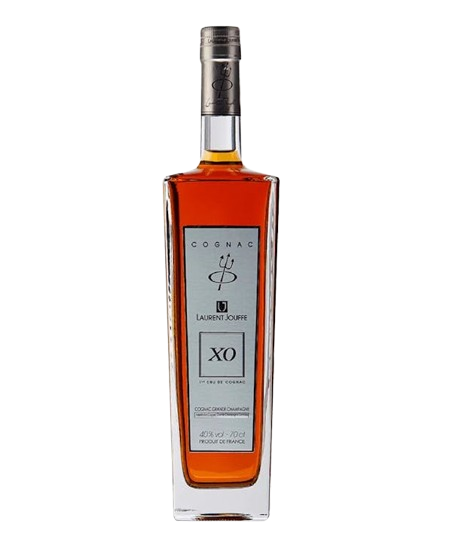
COGNAC VSOP 1ER CRU DE COGNAC GRAND CHAMPAGNE - JOUFFE LAURENT
Made exclusively with brandies from Grande Champagne, the most prestigious cru in the Cognac area, this VSOP from Maison Jouffe is the most elegant and refined expression of the Charentais style.
In the glass it has an amber color with golden reflections. Delicate scents of vanilla and white chocolate emerge on the nose, accompanied by toasted hazelnuts and a thin mineral vein. The sip is soft and enveloping, almost sweet, with hints of honey, vanilla and toasted dried fruit that lead to a fruity, balanced and long-lasting finish. Perfect with foie gras, mild blue cheeses, hazelnut tarts, tarte tatin, and white chocolate, it's also excellent as a meditation spirit at the end of dinner.
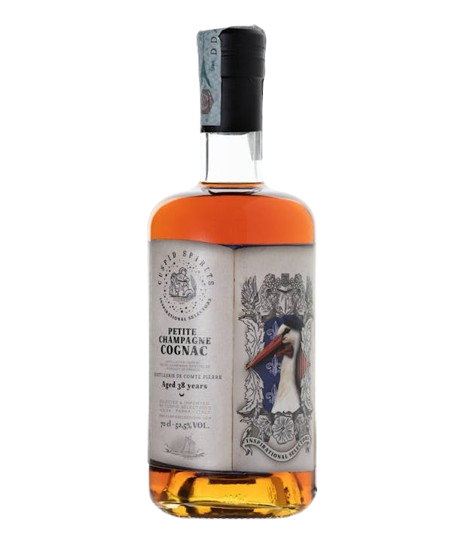
COGNAC PETITE CHAMPAGNE COMTE PIERRE 38 ANNI - CUSPID SELECTIONS
This extraordinary Cognac from Petite Champagne represents the essence of the de Joyet family and demonstrates how time can transform a spirit into a liquid work of art. Obtained from Ugni Blanc and refined for nearly four decades, it expresses a rare aromatic complexity.
The color resembles chestnut honey. The bouquet is intense and deep, with hints of crème brûlée, apple strudel and vanilla. On the palate it is creamy, full and rich in nuances: custard, caramel, ginger, cardamom and cinnamon follow one another until a very long finish, characterised by notes of chocolate cake and dried fruit. Ideal with dark chocolate over 70%, Sachertorte, pecans, toasted almonds and large structure cigars. A Cognac to be tasted slowly, without haste.
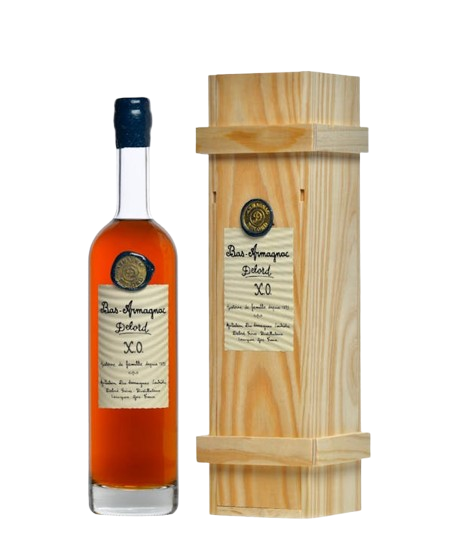
XO BAS-ARMAGNAC - DELORD
If the two previous Cognacs represent precision and elegance, this XO Bas-Armagnac shows all the most rustic and authentic personality of Gascony. Produced in the municipality of Lannepax by the historic Maison Delord, it was born from a blend of Ugni Blanc, Colombard, Baco and Folle Blanche. After continuous distillation in the armagnacais still, it rests for over ten years in new French oak barrels and subsequently in older barrels.
The color is light topaz with orange highlights. On the nose it offers notes of cooked plum, quince, dried flowers and vanilla. The entrance into the mouth is slightly woody, with hints of cooked fruit, sweet spices and well-present tannins that give depth and character.
Try it in combination with foie gras, duck breast with plums, game terrines and medium-strength aged cheeses. It also expresses its best with a soft cigar or as a simple meditation distillate.